Peat, phenols, and PPM in whisky: how peat smoke is measured vs how it tastes
What PPM means on a whisky label, how kilning with peat creates smoky phenols, why barley PPM doesn't equal liquid smoke, and Islay peat levels.
If you have ever uncorked a bottle of peated Islay single malt, the sensory shock is unmistakable. One person smells crackling autumn bonfires and sweet barbecue; another smells antiseptic bandages, hospital corridors, and tarmac.
Love it or hate it, peat smoke is one of the most distinctive flavour compounds in the culinary world. But in recent years, marketing departments have turned peat into a numbers race, splashing cryptic figures like “50 PPM” or “130 PPM” across labels.
What does PPM actually measure? Why doesn’t a 100 PPM whisky always taste twice as smoky as a 50 PPM whisky? And how does burning ancient Scottish bog moss translate into liquid smoke in your glass?
What is peat, and how does it get into whisky?
John: “Peat is decayed vegetable matter: thousands of years of sphagnum moss, sedges, heather, shrubs, and bog plants that failed to rot fully due to waterlogged, acidic, anaerobic conditions in Scottish moors. Over millennia, it compresses into dense, carbon-rich turf.
To make single malt whisky, barley grain must be steeped in water and allowed to germinate to convert its starches into fermentable sugars. To halt germination before the barley sprouts into a plant, maltsters dry the grain in a kiln. If you burn dry peat blocks beneath the perforated kiln floor, the smouldering peat produces thick, pungent smoke laden with organic chemical compounds called phenols. Those phenols adhere to the sticky, damp husks of the barley grains.”
Tom: “Notice that you are not filtering whisky through peat, and you are not steeping peat in the wash. The smoke is infused purely during the malting stage. Once the grain is kilned and dried, that smoky footprint is baked in.”
What does PPM actually measure?
PPM stands for Phenol Parts Per Million.
John: “Here is the critical distinction that marketing brochures conveniently skip: PPM is measured in the dry malted barley, not in the liquid inside the bottle.
Technicians use high-performance liquid chromatography (HPLC) to test a grain sample after it leaves the maltings. When Ardbeg states ‘50 to 55 PPM’, or Octomore states ‘130 PPM’, that number records the phenol concentration on the grain husks before mashing, before fermentation, before distillation, and before ten years of oak maturation.”
Why barley PPM doesn’t equal smoke in the glass
If two distilleries purchase identical malt kilned to 50 PPM, their bottled whiskies can taste radically different. Why?
John: “Because distillation cut points and still geometry rewrite the chemical balance completely:
- Phenols are heavy compounds: Phenolic compounds (phenol, cresols, guaiacols, xylenols) have high boiling points. They do not evaporate early in the distillation run; they come across late in the distillation, towards the tail end of the spirit run (the feints).
- Still shape and reflux: Distilleries with short, squat stills (like Lagavulin) allow heavy phenols to boil up and over the lyne arm into the condenser, yielding heavy, oily smoke. Distilleries with tall stills and ascending lyne arms (like Glenmorangie) cause heavy compounds to condense and fall back down (reflux), washing out the phenols.
- The spirit cut: If a distillery cuts from the spirit heart to the feints at 65% ABV, they capture a massive payload of medicinal phenols. If they cut early at 70% ABV, they leave the heavy smoke behind in the still.”
Tom: “And then comes the cask. As peated spirit matures in oak barrels over ten, sixteen, or twenty years, those volatile phenols slowly oxidise and marry with wood sugars. A young, rowdy 8-year-old peated malt will often punch your teeth in with medicinal smoke, whereas a stately 25-year-old from the same stills tastes mellow, waxy, and gentle.”
The Islay peat spectrum: from mild to monster
Not all peated whiskies are created equal. Different distilleries aim for distinct phenol levels in their malt:
| Distillery | Typical malt PPM | Distillation character | Flavour profile |
|---|---|---|---|
| Bunnahabhain | 1–2 PPM | Unpeated malt | Marine salt, dried fruit, rich malt |
| Bowmore | 20–25 PPM | Medium peat | Tropical fruit, floral smoke, gentle ember |
| Lagavulin | 35 PPM | Long distillation | Rich lapsang souchong, cigar tobacco, brine |
| Port Charlotte | 40 PPM | Trickle-distilled | Earthy peat, barbecue embers, citrus |
| Laphroaig | 45–50 PPM | Cold-smoked kilning | Antiseptic, seaweed, TCP, medicinal clove |
| Ardbeg | 50–55 PPM | Purifier fitted to still | Intense tar, lime zest, pine resin, espresso |
| Octomore | 80–300+ PPM | Extreme barley peating | Dense cereal smoke, lemon oil, surprising elegance |
Peat smoke vs wood smoke: medicinal phenols vs sweet char
Tom: “Drinkers often ask: ‘Can a bourbon or unpeated whisky be smoky?’ Yes, but it is a completely different kind of smoke.
When American oak barrels are charred over a gas flame, the charred wood staves produce wood guaiacol, which smells of toasted oak, campfire embers, and hickory bacon. Peat smoke, by contrast, is rich in cresols and xylenols derived from decomposing moss and heather. That is where the iodine, seaweed, diesel oil, and hospital bandage notes come from. If you want sweet barbecue smoke, look for heavy barrel char; if you want wild coastal medicinal smoke, you need Scottish peat.”
In-stock peated benchmark single malts
Here are five benchmark peated single malts from our catalogue that showcase the diversity of peat:
Ardbeg 10 Year Old: £45.00 at The Whisky Shop. The benchmark peated malt from the south coast of Islay, bottled at 46% ABV, non-chill filtered.
- John’s technical analysis: “Ardbeg malts its barley to 50–55 ppm. A unique purifier pipe on the spirit still forces heavy compounds back down, resulting in a spirit that combines heavy creosote with bright lime and lemon esters.”
- Tom’s tasting note: “Smoked lemons, sea salt, cracked black pepper, and espresso. Crisp, vibrant, and incredibly complex.”
Port Charlotte 10 Year Old: £57.99 at DrinkSupermarket.com. Heavily peated single malt distilled at Bruichladdich, bottled at 50% ABV.
- John’s technical analysis: “Barley peated to 40 ppm, matured 100% on Islay in first-fill ex-bourbon (65%), second-fill ex-bourbon (10%), and French wine casks (25%).”
- Tom’s tasting note: “Barbecue glazed ribs, maritime peat, vanilla custard, and toasted brioche. The 50% bottling strength carries the dense smoke magnificently.”
Lagavulin 16 Year Old: £83.99 at DrinkSupermarket.com. The stately aristocrat of southern Islay malts, bottled at 43% ABV.
- John’s technical analysis: “Barley peated to 35 ppm. Slowest distillation on Islay over pear-shaped stills, followed by sixteen full years in refill oak casks.”
- Tom’s tasting note: “Sweet lapsang souchong tea, dried figs, pipe tobacco, and iodine. The sixteen years of maturation have softened the smoke into regal sophistication.”
Caol Ila 12 Year Old: £49.96 at Milroy's of Soho. Distilled overlooking the Sound of Islay, bottled at 43% ABV.
- John’s technical analysis: “Uses the same 35 ppm peated malt as Lagavulin, but distills through tall stills with upward lyne arms, yielding a lighter, fresher, grassy spirit.”
- Tom’s tasting note: “Fresh green apple, lemon zest, wet pebbles, and clean coastal bonfire smoke. The perfect introductory peated malt.”
Laphroaig 10 Year Old Sherry Oak Finish: £49.95 at Hard To Find Whisky. Finished in seasoned Oloroso sherry casks, bottled at 48% ABV.
- John’s technical analysis: “Classic Laphroaig medicinal peat (45 ppm) finished for over twelve months in European oak Oloroso sherry casks.”
- Tom’s tasting note: “Smoked kippers meet dark fruitcake. Medicinal TCP and maritime brine wrapped in sticky raisins and cloves.”
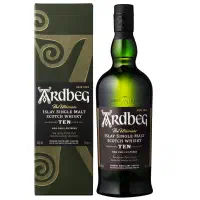
Ardbeg 10 Year Old
10 years · 46.0% ABV · 70cl
from £45.00 4 retailers
£49.99 delivered
Save up to £2.50
Compare prices
Port Charlotte 10 Year Old
10 years · 50.0% ABV · 70cl
from £57.99 5 retailers
£62.94 delivered
Save up to £11.01
Compare prices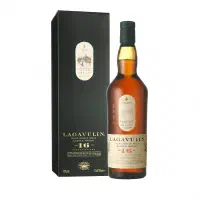
Lagavulin 16 Year Old
16 years · 43.0% ABV · 70cl
from £83.99 3 retailers
£88.94 delivered
Save up to £1.01
Compare prices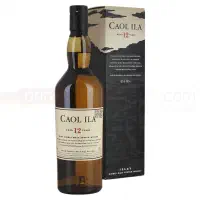
Caol Ila 12 Year Old
12 years · 43.0% ABV · 70cl
from £49.96 2 retailers
£54.91 delivered
Save up to £4.03
Compare prices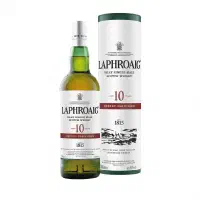
Laphroaig 10 Year Old Sherry Oak Finish
10 years · 48.0% ABV · 70cl
from £49.95 4 retailers
£55.90 delivered
Save up to £10.04
Compare pricesHow to approach peated whisky as a beginner
Tom: “If you are new to peat, don’t start by daring yourself to drink an Octomore. Begin with a balanced maritime malt like Caol Ila 12 or Bowmore 15 where the smoke acts as a seasoning rather than a bludgeon. Once your palate discovers the sweetness hiding beneath the ash, you will never look back.”
Questions
What does PPM mean on a whisky bottle?
Are all Islay single malts peated?
Does peated whisky lose its smokiness as it ages in the cask?
About the author
