What is single malt Scotch whisky: pot stills, regulations, and the 5 types of Scotch
What defines a single malt Scotch whisky, what 'single' really means, how pot stills work, and the 5 legal categories of Scotch.
If you have ever stood in front of a supermarket spirits shelf feeling bewildered by words like “Single Malt”, “Blended Malt”, “Single Grain”, and “Small Batch”, you are not alone. The Scotch whisky industry has spent a century cloaking its terminology in misty Scottish heritage and Victorian jargon.
Behind the romantic marketing lies one of the most strictly regulated spirits on earth. Here is the straightforward, hype-free guide to what single malt Scotch actually is, what that word “single” means, and how single malts differ from the other four types of Scotch whisky.
The strict legal checklist: what makes a single malt?
John: “In the UK, Scotch is governed by the Scotch Whisky Regulations 2009 (S.I. 2009/2890). Under Regulation 3(2), to earn the right to print ‘Single Malt Scotch Whisky’ on a label, a spirit must satisfy five non-negotiable legal criteria:
- One grain: Distilled exclusively from water and 100% malted barley (no unmalted grains, wheat, rye, or corn).
- One distillery: Produced entirely from start to finish at one single Scottish distillery.
- One still type: Batch-distilled in traditional copper pot stills (never in continuous industrial column stills).
- Scottish maturation: Aged entirely in oak casks (with a capacity not exceeding 700 litres) within Scotland for a minimum of three years.
- Bottling strength: Bottled at a minimum of 40% ABV.”
Tom: “Notice what is not on that list: luxury price tags, tartan gift boxes, or Scottish ownership. It is a precise manufacturing standard designed to protect the integrity of the spirit.”
What does the word “single” actually mean?
Tom: “The most common misunderstanding among beginners is assuming ‘single malt’ means the whisky came from one single cask, or was made in one single day.
It does not. ‘Single’ refers to the distillery, not the barrel.
When you buy a standard bottle of Glenfiddich 12, Talisker 10, or Laphroaig 10, that liquid was vatted together from dozens, sometimes hundreds, of different oak casks resting across the distillery’s warehouses. Master blenders marry those casks together to create the brand’s unmistakable house flavour profile. As long as every single drop of liquid originated from those specific distillery pot stills, it is a single malt.”
The 5 legal types of Scotch whisky
Under the 2009 Regulations, all Scotch whisky is legally categorised into five distinct categories:
1. Single Malt Scotch Whisky
100% malted barley, batch pot stills, single distillery. (Examples: Glenfiddich, Talisker, Macallan, Laphroaig).
2. Single Grain Scotch Whisky
Distilled at a single Scottish distillery, but using unmalted cereals (such as wheat or maize) alongside malted barley, typically produced in continuous column stills. Grain whisky is lighter, cleaner, and higher in proof off the still. (Examples: Cameronbridge, Haig Club, historic Cambus).
3. Blended Malt Scotch Whisky
A marriage of two or more Single Malt Scotch whiskies produced at different Scottish distilleries. Formerly known as ‘vatted malt’ or ‘pure malt’. (Examples: Monkey Shoulder, Johnnie Walker Green Label).
4. Blended Grain Scotch Whisky
A marriage of two or more Single Grain Scotch whiskies produced at different Scottish distilleries. (Example: Compass Box Hedonism).
5. Blended Scotch Whisky
The commercial titan. A blend of one or more Single Malts with one or more Grain Whiskies. Blended Scotch represents roughly 90% of all Scotch sold worldwide. The light, inexpensive grain whisky provides smooth accessibility and lowers cost, while the rich single malts supply flavour, depth, and character. (Examples: Johnnie Walker Black Label, Famous Grouse, Chivas Regal, Bell’s).
Why pot stills matter
Tom: “Why can’t a single malt be run through a giant modern column still to save money and energy?”
John: “Because pot stills behave completely differently from industrial column stills. A continuous column still strips spirit up to 94.8% ABV, removing virtually all raw grain character to create near-neutral spirit.
A copper pot still is a batch vessel. The wash boils, rising up a wide swan neck before condensing down the lyne arm. Copper is chemically active: it binds with foul-tasting sulphur compounds and precipitates them out of the vapor. Crucially, pot stills operate at lower distillation strengths (around 68% to 72% ABV), allowing rich fatty acid esters, barley oils, and congeners to carry over into the new make. That is what gives single malt its chewy texture, biscuity maltiness, and aromatic depth.”
In-stock single malt benchmarks to explore
Here are four benchmark Scottish single malts from our catalogue that showcase the diversity of the category:
Glenfiddich 12 Year Old: £38.99 at DrinkSupermarket.com. The world’s top-selling single malt from Dufftown in Speyside, bottled at 40% ABV.
- Tom’s verdict: “The global baseline for single malt. Fresh green pears, sweet cream, and delicate blossom honey. Incredibly approachable and smooth.”
- John’s technical note: “Distilled in small copper pot stills identical in shape to the original 1887 stills, matured in American oak ex-bourbon and European oak sherry casks before marrying in wooden tuns.”
Balvenie 12 Year Old DoubleWood: £50.95 at Hard To Find Whisky. Classic Speyside single malt finished in Spanish Oloroso sherry casks, bottled at 40% ABV.
- Tom’s verdict: “The gateway to richer, wood-finished single malts. Sweet vanilla, honey, cinnamon, and stewed raisins.”
- John’s technical note: “Balvenie still grows a portion of its own barley and operates traditional floor maltings on site, giving a distinctively sweet, honeyed cereal base.”
Talisker 10 Year Old: £42.45 at Hard To Find Whisky. Maritime single malt distilled on the windswept Isle of Skye, bottled at 45.8% ABV.
- Tom’s verdict: “Wild, coastal, and invigorating. Salty ocean spray, smoky malt, and a famous fiery kick of cracked black pepper on the swallow.”
- John’s technical note: “Talisker uses distinctive U-shaped spirit wash stills and worm tub condensers outside the stillhouse, creating high copper contact and a singularly pungent, peppery malt profile.”
Auchentoshan 12 Year Old: £34.00 at The Whisky Shop. Lowland single malt renowned for its triple distillation, bottled at 40% ABV.
- Tom’s verdict: “Delicate, citrus-forward, and crisp. Tangerines, toasted almonds, and ginger. Perfect for warm summer afternoons or newcomers.”
- John’s technical note: “One of the only Scottish distilleries to triple distill 100% of its spirit up to 81% ABV through three stills, stripping heavy oils to produce an exceptionally light, clean Lowland style.”
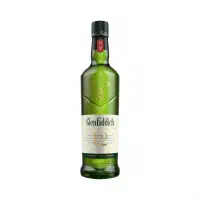
Glenfiddich 12 Year Old
12 years · 40.0% ABV · 70cl
from £38.99 5 retailers
£43.94 delivered
Save up to £7.01
Compare prices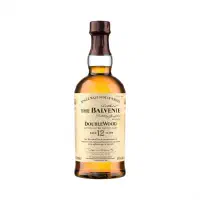
Balvenie 12 Year Old DoubleWood
12 years · 40.0% ABV · 70cl
from £50.95 5 retailers
£56.40 delivered
Save up to £4.04
Compare prices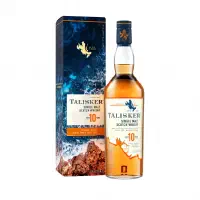
Talisker 10 Year Old
10 years · 45.8% ABV · 70cl
from £42.45 5 retailers
£48.40 delivered
Save up to £7.54
Compare prices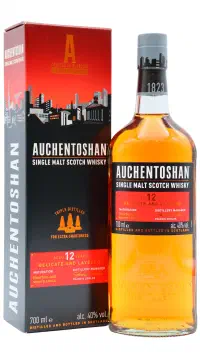
Auchentoshan 12 Year Old
12 years · 40.0% ABV · 70cl
from £34.00 3 retailers
£38.99 delivered
Save up to £4.95
Compare pricesHow to begin your single malt journey
Tom: “Don’t let single malt snobs tell you that you must drink peated 60% monsters neat in a crystal tulip glass. Start with an approachable, unpeated Speyside like Glenfiddich 12 or an easy-drinking Lowland like Auchentoshan. Sip it neat, add a splash of room-temperature water, and take your time. You are tasting five hundred years of Scottish distilling heritage.”
Questions
What is the difference between single malt and blended Scotch?
Why are copper pot stills required for single malt Scotch?
Can single malt whisky be produced outside Scotland?
About the author
