Whisky maturation and age statements: oak chemistry, angel's share, and bottle ageing myths
What an age statement legally means under Scotch law, how wood transforms spirit, the angel's share, and why whisky stops aging in the bottle.
When clear, fiery new-make spirit trickles off the copper pot stills at a Scottish distillery, it sits at around 68% to 70% ABV. It smells of hot cereal, yeasty bread dough, and green apples. It looks like water.
Ten, eighteen, or twenty-five years later, that same liquid emerges from a dark warehouse as a shimmering, golden-amber nectar laden with vanilla, leather, roasted nuts, and dried fruit.
Between 60% and 80% of the final flavour of a mature single malt comes directly from its time inside an oak barrel. Yet misconceptions about age statements, bottle aging, and maturation chemistry remain widespread. Here is the reality of how wood transforms spirit.
What does an age statement legally mean?
John: “Under Regulation 12 of the Scotch Whisky Regulations 2009, the rule is absolute and uncompromising: an age statement on a bottle of Scotch must reflect the age of the youngest whisky in the blend.
If a master blender marries ninety-nine casks of 25-year-old single malt with one single cask of 10-year-old single malt, the bottle can legally only be labelled as a 10 Year Old. The distiller cannot calculate an average age, and they cannot state the age of the oldest component on the front label. If a bottle carries an age statement, every drop in that bottle is guaranteed by UK law to have matured in oak for at least that many years.”
Tom: “Which explains why No Age Statement (NAS) whiskies became popular with brand owners over the last decade. NAS allows distillers to blend vibrant young 6-year-old casks with older 15-year-old wood without being forced to slap a ‘6 Year Old’ label on a premium-priced bottle.”
The three stages of maturation chemistry
Maturation inside an oak barrel is not a passive resting period; it is a dynamic biochemical reaction divided into three stages:
1. Subtractive maturation (the filter effect)
When oak staves are toasted and charred by a cooper, a thin layer of activated carbon forms on the interior surface. As spirit sloshes against this charred wood, the carbon acts like a natural charcoal filter, absorbing harsh, unpalatable compounds like dimethyl sulphide (cabbage notes) and pungent volatile sulphur molecules.
2. Additive maturation (wood extraction)
The alcohol and water in the spirit act as solvents, penetrating deep into the cellular structure of the oak staves. They dissolve and extract organic wood compounds:
- Lignins: Broken down into vanillin (creamy vanilla) and syringaldehyde.
- Hemicellulose: Caramelised by heat into wood sugars, furfural (toasted almonds), and maltol.
- Oak lactones: Imparting coconut, sweet wood, and buttery richness.
- Tannins: Providing structure, astringency, tea-like dryness, and colour.
3. Interactive maturation (micro-oxidation)
Oak is a porous membrane. Over decades, atmospheric oxygen seeps through the staves at microscopic levels, oxidising ethanol into acetals and aldehydes, creating delicate floral, fruity, and ester-rich top notes that cannot exist in fresh wood.
The Angel’s Share: the cost of evaporation
Tom: “Every year a barrel rests in a Scottish warehouse, it loses roughly 1.5% to 2% of its total liquid volume through evaporation. Cellar workers poetically call this the Angel’s Share.”
John: “In cold, damp Scottish warehouses, humidity is high, meaning alcohol evaporates through the staves slightly faster than water, causing the spirit’s ABV to drop slowly over time. After 25 years, a barrel that started with 250 litres might contain fewer than 130 litres. You are not just paying for the passage of time when buying older whisky; you are paying for the liquid that vanished into thin air.”
The bottle aging myth: does whisky age in the glass?
Tom: “One of the most persistent myths I hear from drinks enthusiasts is: ‘My grandfather bought a 12-year-old bottle in 1980 and kept it in his cupboard, so it’s a 56-year-old whisky now!’
I am sorry to burst the bubble: it is still a 12-year-old whisky.
Unlike fine wine, which contains live yeasts, enzymes, and residual sugars that continue to evolve inside a corked glass bottle, whisky is a distilled spirit at 40% ABV or higher. Microorganisms cannot survive, and inert glass does not interact with ethanol. Once whisky is taken out of the wood and sealed in glass, maturation stops dead in its tracks.”
Is older always better? The over-aging trap
John: “There is an assumption that an 18-year-old is automatically superior to a 12-year-old, and a 25-year-old is superior to an 18-year-old. That is commercial marketing, not sensory reality.
Casks have a peak maturation window. If you leave a delicate, floral spirit in an active first-fill European oak cask for too long, the aggressive wood tannins will eventually overpower the distillery’s spirit character. The whisky becomes dry, bitter, astringent, and tastes like chewing on a wooden pencil. True greatness lies in finding the point where the distillery spirit and the oak cask achieve perfect equilibrium.”
In-stock age statement benchmarks to compare
Here are four benchmark single malts from our catalogue that demonstrate the progression of age:
Glenfiddich 12 Year Old: £38.99 at DrinkSupermarket.com. The world’s benchmark Speyside 12-year-old, matured in American and European oak casks. 40% ABV.
- John’s technical analysis: “Twelve years in oak softens the light, ester-driven Glenfiddich spirit, leaving fresh pear, green apple, and subtle creaminess without heavy wood tannins.”
- Tom’s tasting note: “Crisp orchard fruit, fresh honey, and sweet malt. The quintessential everyday Speyside dram.”
Balvenie 12 Year Old DoubleWood: £50.95 at Hard To Find Whisky. Pioneer of two-cask maturation, finished in Spanish Oloroso sherry casks. 40% ABV.
- John’s technical analysis: “Aged for nearly twelve years in ex-bourbon wood, followed by up to nine months in Oloroso butts. Shows how a short finishing window layers dried fruit over sweet vanilla.”
- Tom’s tasting note: “Warm cinnamon toast, dried raisins, honey, and nuttiness. Beautifully rounded.”
Lagavulin 16 Year Old: £83.99 at DrinkSupermarket.com. The benchmark aged peated malt from southern Islay, bottled at 43% ABV.
- John’s technical analysis: “Sixteen years in refill oak casks allows the 35 ppm barley phenols to integrate deeply with wood sugars, creating polished lapsang souchong tea and pipe tobacco notes.”
- Tom’s tasting note: “Regal bonfire smoke, coastal brine, sweet figs, and dark chocolate. A masterclass in patient aging.”
Highland Park 18 Year Old: £135.00 at Milroy's of Soho. Orkney single malt matured predominantly in first-fill sherry seasoned oak casks. 43% ABV.
- John’s technical analysis: “Eighteen years on the windswept island of Orkney creates a seamless marriage of aromatic heather peat smoke and rich Spanish sherry oak.”
- Tom’s tasting note: “Dark honey, bitter orange marmalade, rich fruitcake, and gentle floral smoke. Truly elite balance.”
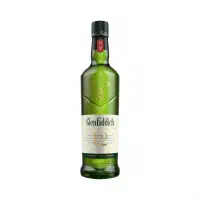
Glenfiddich 12 Year Old
12 years · 40.0% ABV · 70cl
from £38.99 5 retailers
£43.94 delivered
Save up to £7.01
Compare prices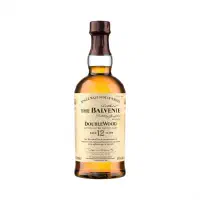
Balvenie 12 Year Old DoubleWood
12 years · 40.0% ABV · 70cl
from £50.95 5 retailers
£56.40 delivered
Save up to £4.04
Compare prices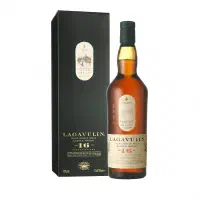
Lagavulin 16 Year Old
16 years · 43.0% ABV · 70cl
from £83.99 3 retailers
£88.94 delivered
Save up to £1.01
Compare prices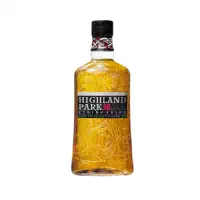
Highland Park 18 Year Old
18 years · 43.0% ABV · 70cl
from £135.00 1 retailer
£135.00 delivered
Compare pricesSummary: how to read an age statement
Tom: “Don’t treat age as a quality score. Treat it as a stylistic compass. A 10 or 12-year-old gives you bright distillery spirit and fresh malt; an 18-year-old delivers complex wood spices, leather, and dried fruit. Buy the age profile that fits your mood and your palate.”
Questions
What is the legal minimum age for Scotch whisky?
Does an unopened bottle of whisky get better with age?
What is the difference between dunnage and racked warehouses?
About the author
